CASE STUDIES
-
Project Type: Multi-story Residential Apartment Complex (e.g., a G+10 structure with 150 units).
-
Design Goal: To create a fully coordinated, data-rich 3D model for design validation, clash detection, quantity takeoffs, and facility management handover.
-
Technology: Building Information Modeling (BIM) software (e.g., Revit, Archicad, Tekla Structures) for architectural, structural, and MEP (Mechanical, Electrical, and Plumbing) disciplines.
Challenges Before Designing the Commercial Area


Managing Repetitive Elements: Designing hundreds of identical or near-identical apartment units, which risks creating a massive, slow-performing model if not managed efficiently.
Clash Detection & Coordination: Identifying spatial conflicts (clashes) between disciplines, such as a large air duct running through a structural beam or an electrical conduit crossing a sanitary pipe in a crowded ceiling space.
Solutions
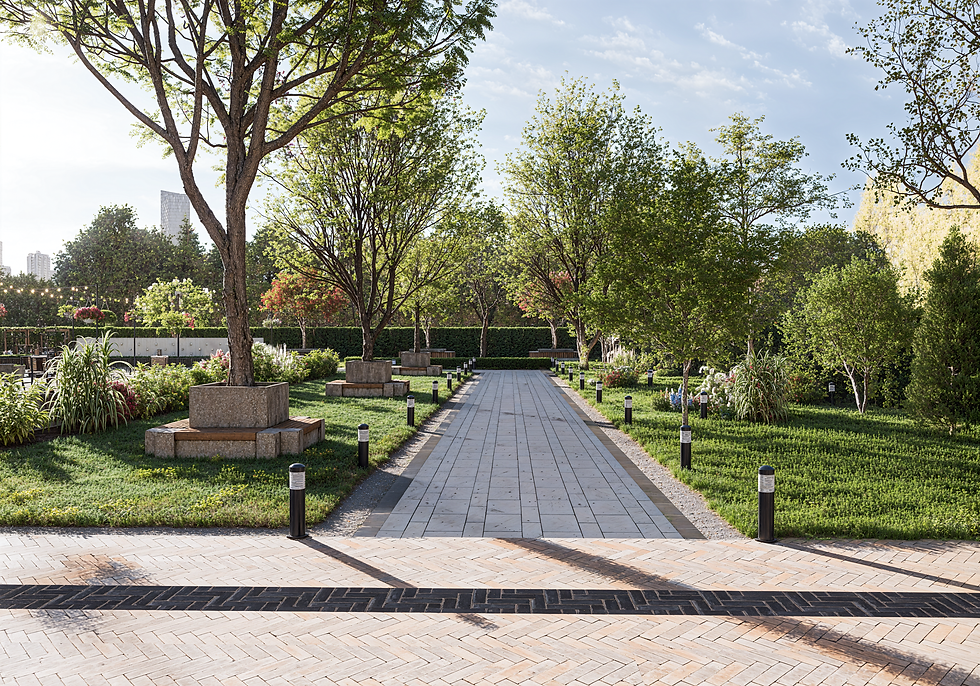
To successfully launch the project, We implemented several strategic solutions to overcome the initial roadblocks. The challenge of conflicting stakeholder requirements was resolved by utilizing a tiered public space strategy: moving beyond simple ground-level parks to incorporate accessible, landscaped gardens, thereby maximizing green space vertically while preserving profitable commercial density below. Most critically, the challenge of communicating the project's experiential value was solved by mandating the use of immersive architectural renderings and virtual reality (VR) walkthroughs, which provided an undeniable, emotional preview of the finished city quarter, earning crucial buy-in and accelerating political approval.


final delivery
After making all required changes, the renderings were ready. We provided two rounds of revisions and here’s what the final renderings looked like.
The Design Solution
To address the challenges and achieve client's goals, a strategic, zoned design was developed and implemented.