CASE STUDIES
The client elevates its city proposal by transforming abstract plans and blueprints into a compelling, shared vision through immersive architectural renderings. This advanced visualization moves beyond static 2D images, utilizing photorealistic detail and often incorporating virtual reality (VR) to allow stakeholders from city council members to concerned citizens to "walk through" the proposed development at a 1:1 scale. This immersion not only dramatically improves comprehension of complex spatial relationships and infrastructure plans but also fosters emotional engagement and consensus. By clearly illustrating how new structures will integrate into the existing urban fabric, impact sightlines, and function as livable spaces, The Client significantly reduces ambiguity, encourages constructive feedback, and ultimately streamlines the approval process by presenting a complete and powerful case for its development.
Challenges Before Designing the Commercial Area


Before design work could begin, we faced several complex challenges that required resolution. The primary hurdle was synthesizing conflicting stakeholder requirements, balancing the city's mandate for increased public green space with investor demands for maximum developable square footage. We also grappled with site complexity, as the proposed location involved integrating new infrastructure across existing historical and protected underground utility lines, demanding a meticulous and often restrictive design footprint. Finally, the greatest challenge was articulating the emotional value of the proposal, conveying how the finished space would feel and function for customers which ultimately led us to prioritize the development of immersive architectural renderings as the key presentation tool.
Solutions
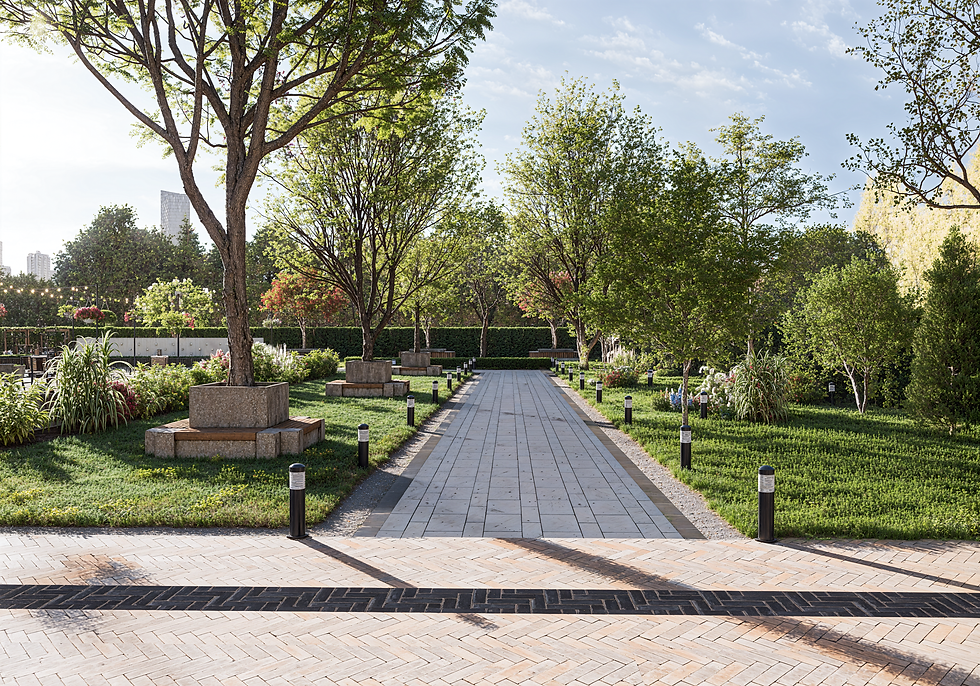
To successfully launch the project, We implemented several strategic solutions to overcome the initial roadblocks. The challenge of conflicting stakeholder requirements was resolved by utilizing a tiered public space strategy: moving beyond simple ground-level parks to incorporate accessible, landscaped gardens, thereby maximizing green space vertically while preserving profitable commercial density below. Most critically, the challenge of communicating the project's experiential value was solved by mandating the use of immersive architectural renderings and virtual reality (VR) walkthroughs, which provided an undeniable, emotional preview of the finished city quarter, earning crucial buy-in and accelerating political approval.


final delivery
After making all required changes, the renderings were ready. We provided two rounds of revisions and here’s what the final renderings looked like.
The Design Solution
To address the challenges and achieve client's goals, a strategic, zoned design was developed and implemented.